October 11, 2026 · 6 min read
Bay window replacement cost: the window, the roof and the seat
By the D&E Mako Renovation crew, Ephrata, PA. General guidance, not a quote for your house.
Replacing a bay window usually costs about $2,500 to $8,000 in 2026, installed, for a standard three-unit bay about 6 feet wide. Bow windows, with four or five curved units, often run $3,500 to $10,000 or more. Surveys put the typical bay replacement somewhere near $3,500 to $5,000. The windows are only part of it. A bay is a small structure that sticks out of the house, with its own roof, a seat board, a head board and support underneath, and those parts are where both the cost and the leaks come from.
 HaverfordNov 2024
The numbers
These ranges come from 2026 national cost guides and contractor surveys, which vary widely.
| Job | Typical installed cost |
|---|---|
| Standard three-unit vinyl bay, same opening | $2,500 to $5,000 |
| Wood or clad bay, same opening | $3,500 to $7,000 |
| Bow window, four or five units | $3,500 to $10,000+ |
| New roof over the bay (shingle) | $500 to $1,500 |
| Copper or standing seam roof over the bay | $1,500 to $4,000+ |
| Rotted seat board, head board or framing | priced as found |
Replacing a bay in the same opening costs less than adding a new bay where there was a flat window, which needs a larger opening and a new header.
We price the units, the roof, the seat and head boards, the support and the trim on separate lines, because any of them can be the reason a bay needs work.
Bay or bow
A bay window is usually three units: a large center window and two angled side windows, often at 30 or 45 degrees. The side units are often double-hungs or casements that open.
A bow window is four to six units of the same size arranged in a gentle curve. It sticks out less but spans a wider wall and looks rounder.
Both need the same supporting parts. Bows usually cost more because of the number of units and the curved roof.
What a bay is made of
- The window units and the mullions that join them.
- A seat board at the bottom, inside, which many people use as a window seat or shelf.
- A head board at the top, inside.
- Support underneath: cables hung from the framing above, brackets, or a framed knee wall down to the foundation.
- A roof over the top: shingles, copper or a metal skirt, flashed into the wall.
- Insulation in the seat and head, which is often missing in older bays and makes them cold.
- Trim and siding around the outside.
Why bays leak and rot
Bays are a well-known source of leaks, and almost all of them come from three places:
- The roof-to-wall joint. Water runs down the wall above and has to be turned out over the bay roof by step flashing or a counter-flashing let into masonry. If that is missing or failed, water goes into the wall and the head board.
- The roof itself. A small, low-slope roof with old shingles or bad seams.
- The seat and the bottom. Water that gets in anywhere ends up at the bottom, rotting the seat board and the framing under it.
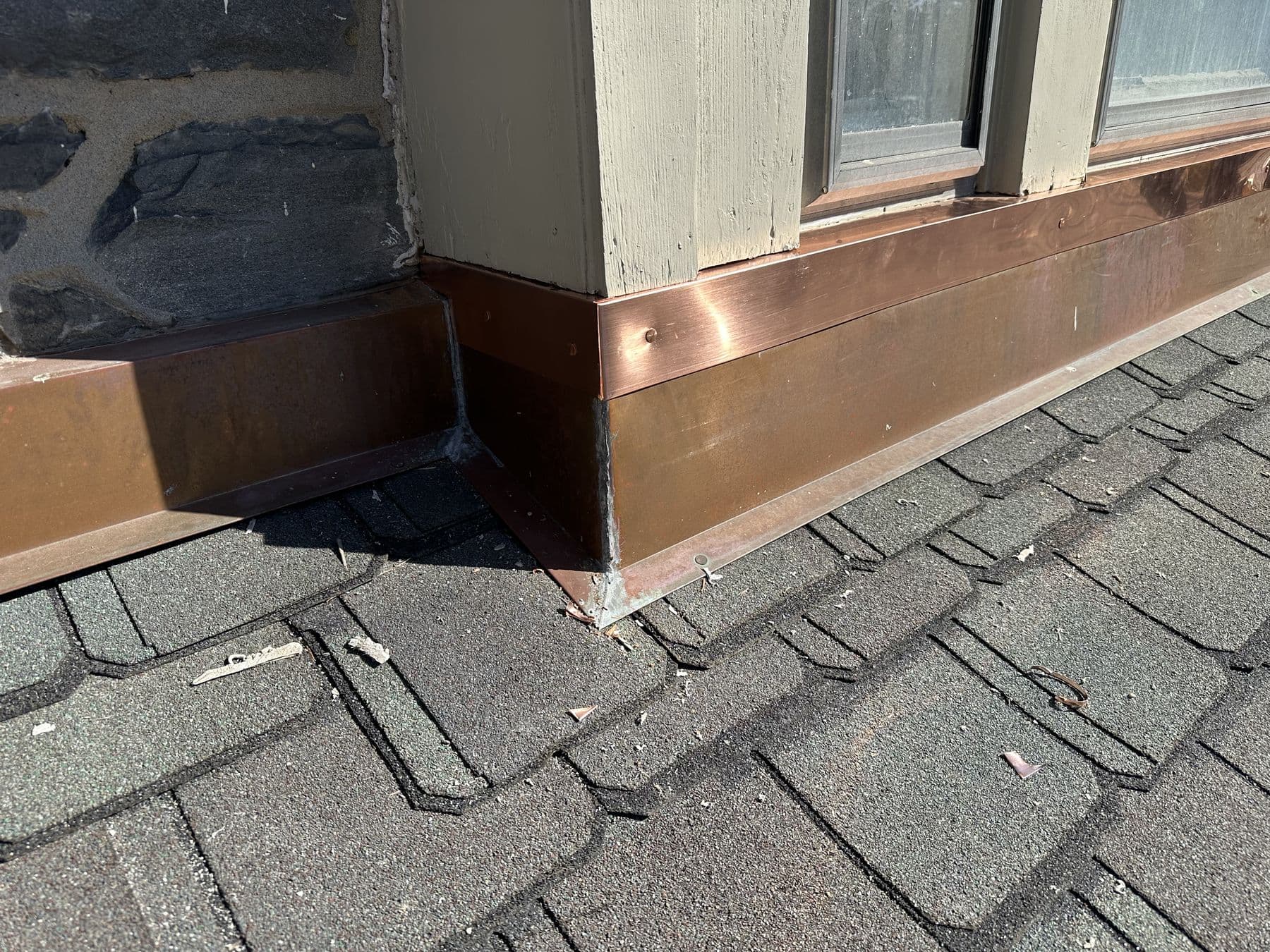
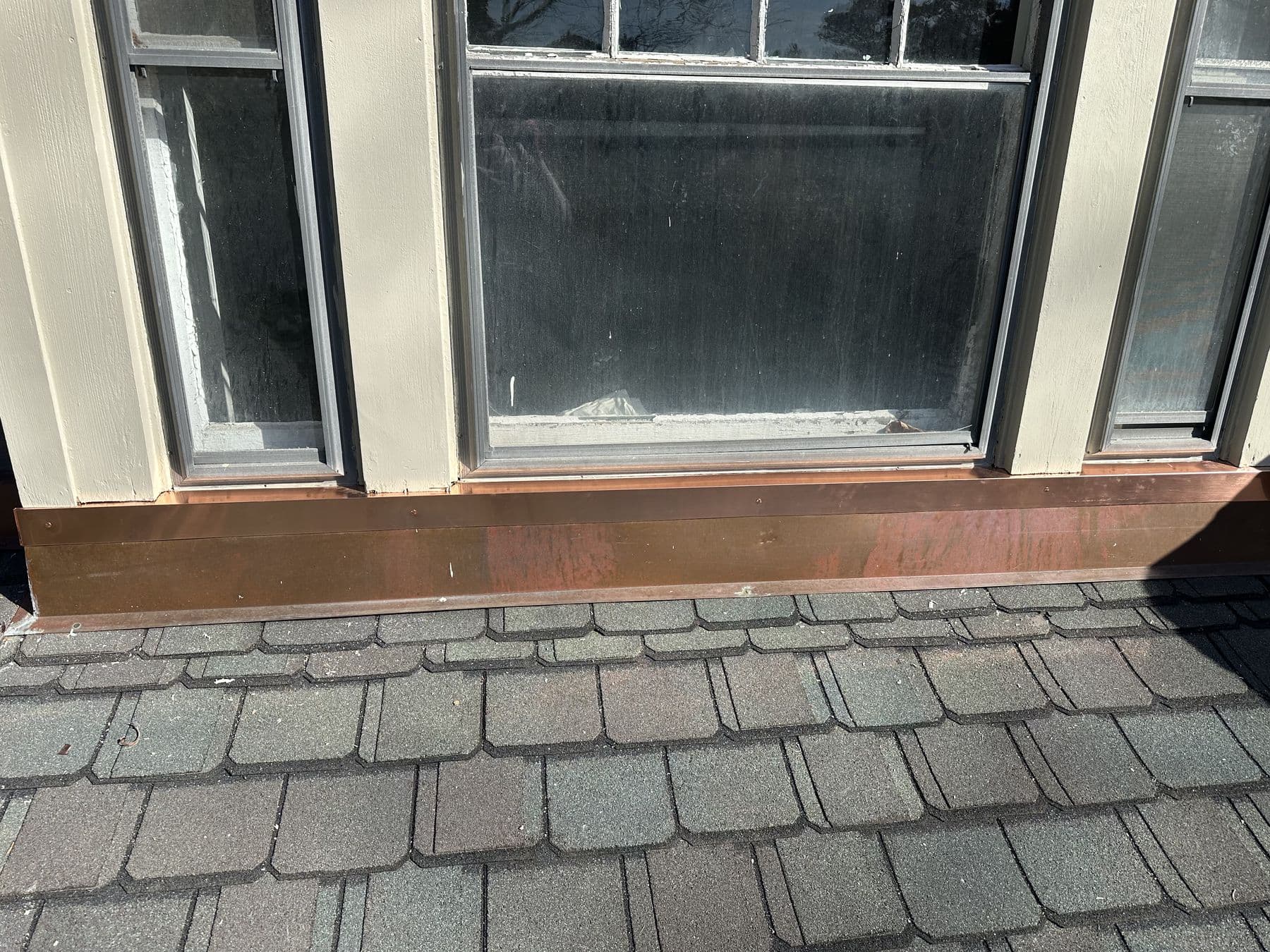
On a house in Haverford, we fitted copper apron and base flashing where a bay window meets a slate roof. Copper is the traditional choice on slate and stone houses, and it outlasts the shingles around it.
 HaverfordNov 2024
Copper roofs over bays
Small copper roofs over bays and entries are common on older houses on the Main Line and in Chester County. They cost more than shingles and last far longer, often 60 years or more. They must be fastened with copper or stainless fasteners only, because steel corrodes against copper. Our copper work service and the copper gutters guide cover copper in more detail.
Support matters
Old bays often sag. You can see it as a gap at the top of the inside trim, a seat that slopes, or windows that stick. Causes include rotted framing under the seat, failed cables or brackets, and settling. A new bay needs proper support:
- Cable support from the framing above, common on factory bays.
- Knee brackets under the seat.
- A framed and sided base down to the foundation, on larger or heavier bays.
If the old bay has sagged, we check the framing and fix the support before the new unit goes in.
Insulating the seat and head
Many older bays are cold in winter because the seat and head boards have little or no insulation behind them. A replacement is the time to fix that: rigid foam or insulation in the seat platform and the head, sealed at the edges. It makes the window seat a place you want to sit.
How a bay replacement goes
- Protect the room and remove the interior seat, head and trim.
- Remove the exterior trim, roof and flashing.
- Remove the old units and inspect the framing, seat, header and support.
- Repair rot and add support where needed.
- Set the new bay or bow unit, level and supported, and fasten it.
- Insulate the seat and head.
- Build or reroof the top, with step flashing or counter-flashing into the wall.
- Trim outside, then install the new seat board, head board and casing inside.
A bay replacement usually takes one to three days, depending on the roof and repairs.
Replacing a bay with a flat window
Some homeowners take out a failing bay and put in a flat window or a picture window. This removes a leak source and costs less to maintain, but it needs wall framing, siding and interior patching where the bay was. It also loses the light and space a bay gives.
Adding a new bay
Adding a bay where there was a flat window means widening the opening, installing a new header and often building a base. It usually needs a building permit and costs more than a replacement. It can make a small room feel much bigger.
Glass choices
Bay windows have a lot of glass facing three directions, so the glass matters. Low-E coatings cut summer heat and winter loss. Tempered glass is required in some locations, like low glass near a floor. A large center picture window with operable side windows is a common and practical layout.
Contracts and permits in Pennsylvania
Replacing a bay in the same opening is generally not a permit job in Pennsylvania, though a new roof or structural repairs can be in some townships. Adding a new bay or enlarging an opening usually needs a permit. Home improvement contracts over $500 must be in writing, with three business days to cancel.
Signs your bay window needs attention
Bays give clear warnings before a small problem becomes a big one. Look for:
- A gap or crack at the top of the inside trim, where the head board meets the wall. This often means the bay is sagging.
- Water stains on the ceiling inside the bay or on the head board.
- A soft or stained seat board, especially at the corners.
- Peeling paint or rot on the outside trim under the bay.
- Shingles curling or missing on the small bay roof.
- Daylight or drafts at the joints between the units.
Catching a failed flashing joint early means a repair. Waiting until the seat and framing rot usually means a replacement.
Inside the bay: seat, head and trim
The inside of a bay is finish carpentry. The seat board is often a single wide board or a built-up top, and it is the first thing people touch, so it should be solid wood or a quality plywood with a hardwood edge. The head board above can be flat or paneled. Casing ties the bay into the room. Many homeowners add a cushion, storage drawers under the seat or shelves at the sides. If you want built-in storage under the seat, plan it during the replacement, while the inside is open.
Questions people ask about bay window replacement
How long does a bay window last? A well-built bay with a good roof and flashing lasts as long as other windows, 20 to 40 years. Bays with poor flashing often have rot problems much sooner.
Can you replace just one window in a bay? Sometimes, if the frame is sound and the unit is still made. Often the units are joined into one assembly, and the whole bay is replaced.
Why is my bay window seat cold? Usually because there is little insulation in the seat platform. A replacement or a repair can add it.
Can a bay window be replaced in winter? Yes, but the opening is large, so we plan it for a dry day and close it the same day.
Is the estimate free? Yes. We check the units, the roof, the flashing and the support, and send a written estimate by part.
See our window replacement service, the copper bay window flashing in Haverford and our window replacement cost guide for Pennsylvania.