October 10, 2026 · 6 min read
Insert vs full-frame window replacement: which one your house needs
By the D&E Mako Renovation crew, Ephrata, PA. General guidance, not a quote for your house.
When you get quotes for window replacement, you will hear two terms: insert replacement (also called pocket replacement) and full-frame replacement. They can differ a lot in price, and they lead to different results. This guide explains both, the trade-offs, and how we decide which one a house needs. It also covers bay windows and what cracked caulk around windows is telling you.
 Lower Merion TwpOct 2025
What each one means
Insert (pocket) replacement
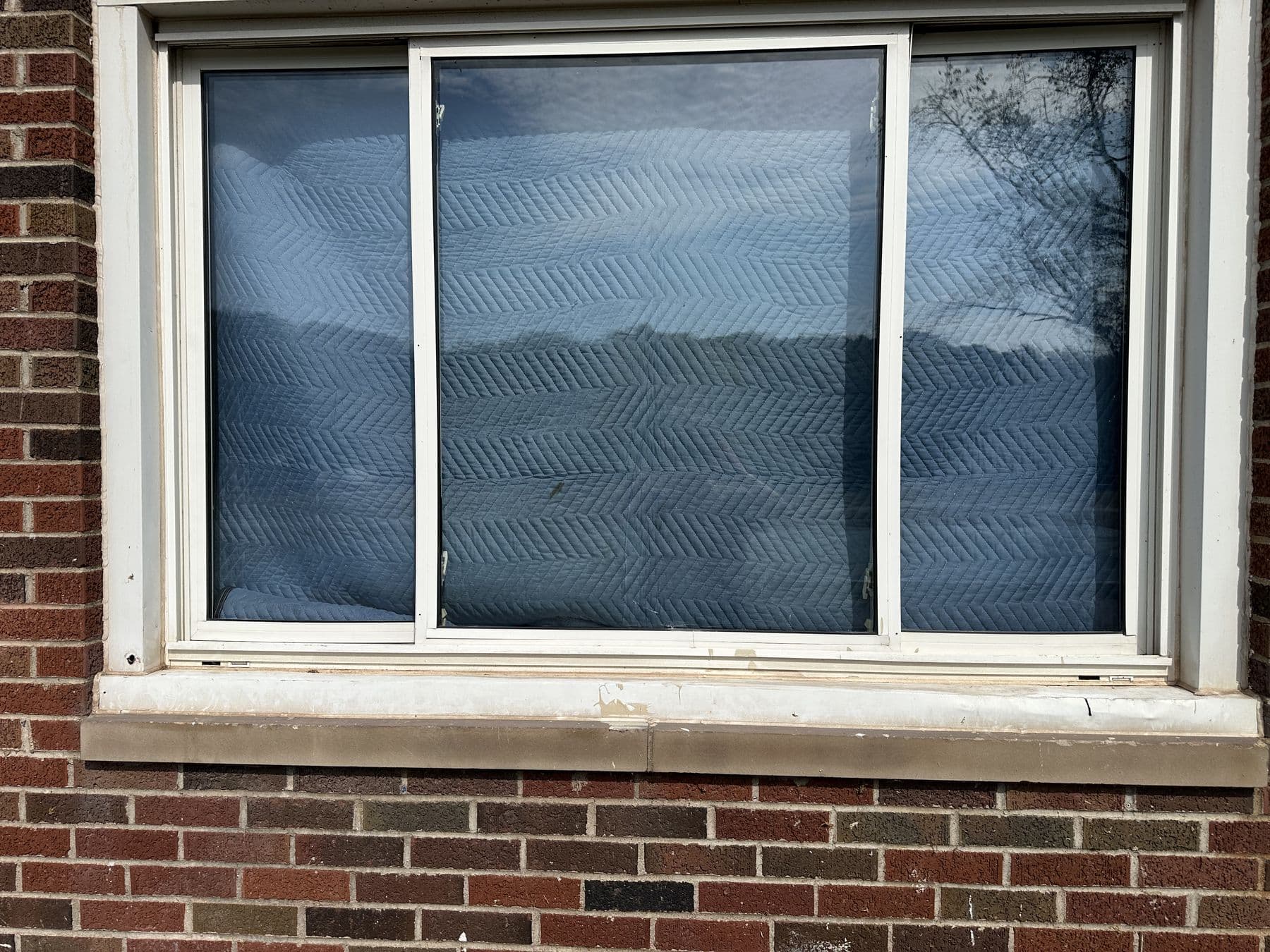
The old sashes, the parts of the window that move, are taken out along with the stops that hold them. The old frame stays in the wall. A new window, built as a complete unit with its own frame, is slid into the old frame and sealed. Inside, the existing casing stays. Outside, the old frame is usually wrapped in aluminum or covered with new trim.
Full-frame replacement
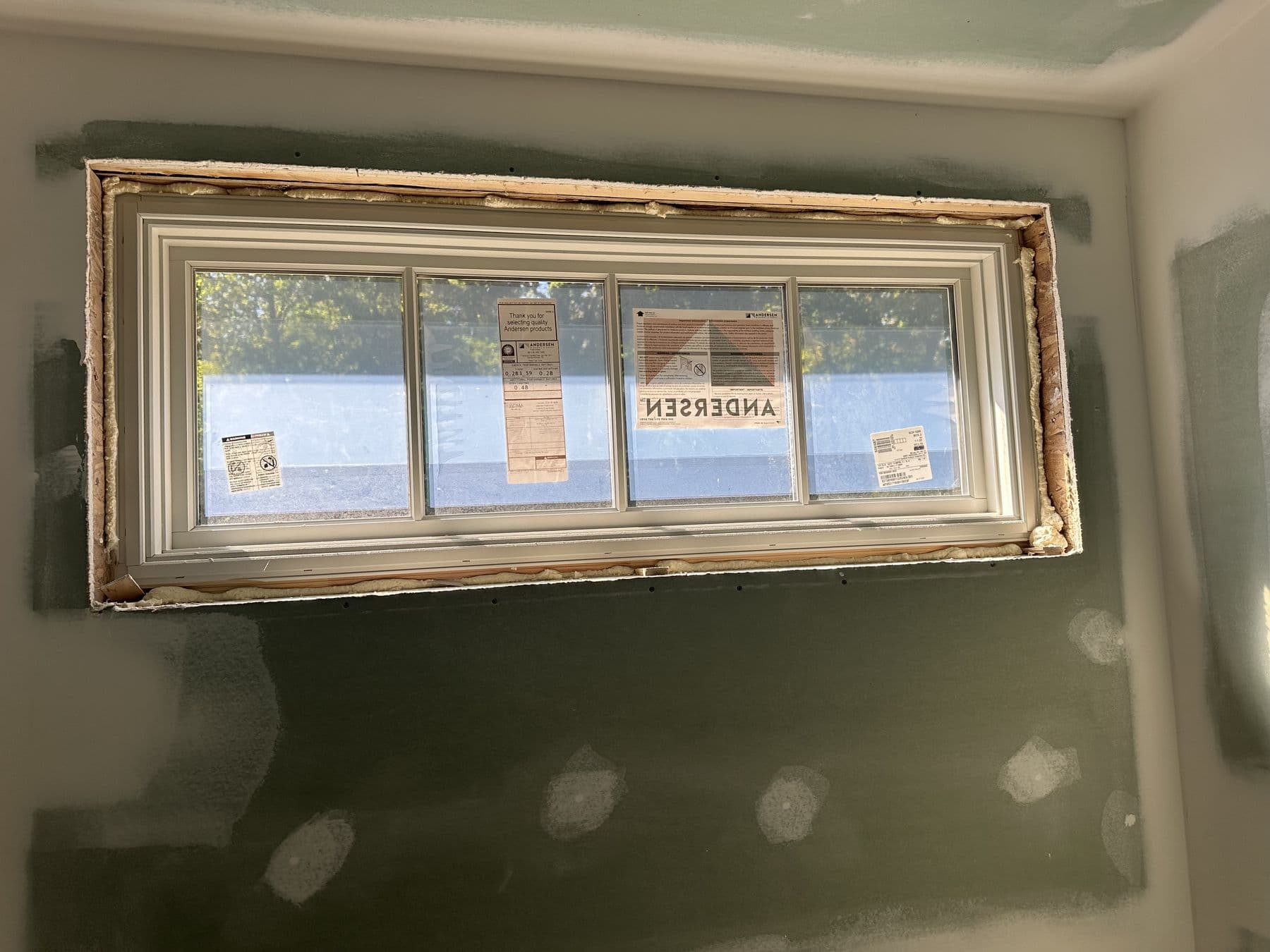
The whole window comes out, down to the rough opening in the framing. That means removing the interior casing and the exterior trim or siding around the window. The opening is checked and repaired, a sill pan and flashing go in, the new window is set, and new trim is installed inside and out.
Insert replacement: pros and cons
Pros
- Lower cost. Less labor, no new interior trim, little disturbance to walls.
- Faster. A crew can do many windows a day.
- Interior plaster and trim stay untouched, which matters in older houses with original casings you want to keep.
Cons
- Smaller glass. The new frame sits inside the old one, so you lose some glass on every side. On small windows that is noticeable.
- Hidden rot stays hidden. If the old sill or the bottom of the jambs is soft, an insert goes on top of it.
- No new flashing. The water management around the window depends on the old frame and whatever was done decades ago.
- Only works with a square, solid frame. Out-of-square frames make inserts hard to seal.
Full-frame replacement: pros and cons
Pros
- Rot is found and fixed. The sill, jambs and framing are visible and can be repaired.
- Proper flashing. A sloped sill pan and flashing tape lapped with the housewrap send any water that gets in back out.
- Full glass size, or even a larger opening if you want it.
- New trim inside and out, so the window looks complete.
- Better insulation around the window, since the gap is filled with low-expansion foam.
Cons
- Higher cost, because of more labor and new trim.
- Disturbs interior finishes. Casing comes off, and paint touch-up is needed.
- Disturbs exterior siding around the window, which needs to be patched or trimmed.
 Lower Merion TwpDec 2025
How we decide
We look at every window before quoting and push a pick into the sill and lower jambs. These are the questions that decide it:
- Is the old frame solid? If the sill or jambs are soft, full frame.
- Is the frame square? If not, an insert will be hard to seal. Full frame.
- Is water getting in? Stains on the wall or floor below the window mean the flashing has failed. Full frame.
- Do you want to keep original interior trim? If yes and the frame is sound, insert.
- Are you replacing siding too? If the siding is coming off anyway, full frame costs only a little more and is the right call.
- How big is the window? On small windows, the lost glass of an insert is more noticeable.
On older houses in Pennsylvania, with decades of water at the sills, we end up recommending full frame most of the time. On houses from the 1990s on, with vinyl or clad windows in solid frames, an insert is often fine.
Windows in stone and brick walls
Masonry walls add a twist. Openings in stone are rarely square, and the window can only be set so deep before it hits the stone. In those walls, full-frame replacement means shimming the new window to the opening, sealing it to the masonry with a sealant that can move, and building the interior trim out to hide the irregular edges. We have done this on fieldstone houses in Lower Merion and brick houses near Douglassville. It takes longer per window, and it is worth it.
Bay and bow windows
Bay windows are several units joined at angles and supported by the house framing, often with their own small roof above. When a bay leaks, it is usually the roof over it or the seat below it, not the glass. Replacing a bay means:
- Supporting the roof while the old unit comes out.
- Checking the seat board and the framing below, which often has rot.
- Installing the new unit with cables or brackets to support its weight.
- Flashing the roof over the bay properly, and in some houses replacing it with copper, which lasts as long as the house.
Cracked caulk around windows
Caulk around windows usually cracks for one of three reasons:
- Age. Caulk lasts years, not decades. Cheap caulk dries out in a few seasons.
- Movement. Wood, vinyl and masonry move at different rates. A joint that is too thin cracks.
- Caulk used as flashing. Some installers rely on caulk alone to keep water out. When it cracks, water gets in.
Recaulking is easy and cheap and worth doing. But if the caulk keeps failing, or the sill below is soft, the problem is behind the caulk. That is when full-frame replacement or a trim and sill rebuild is the real fix. We wrote about a sill rebuild in rotted window sills on a stucco house.
 Douglassville areaSep 2025
What a good install includes either way
Whichever method you choose, these steps matter:
- Accurate measurements of every opening.
- A level, square set, shimmed at the right points.
- Insulation in the gap that will not bow the frame (low-expansion foam or backer rod and sealant).
- Sealant where it belongs: between frame and trim, not over weep holes.
- Exterior trim or capping that sheds water.
- Sashes that open, close and lock easily when we leave.
Cost differences
There is no single number for either method because window size, brand and access vary so much. In general, full-frame replacement costs more per window than insert replacement, mainly because of labor and new trim. On houses where the siding is being replaced at the same time, much of that difference disappears.
The brand and series of window matter too. We compare two common choices in Marvin vs Andersen replacement windows.
The bottom line
- Solid, square frames, newer house, interior trim you want to keep: insert replacement is a good choice.
- Soft sills, out-of-square frames, signs of water, older house, or new siding going on: full-frame replacement is worth the extra cost.
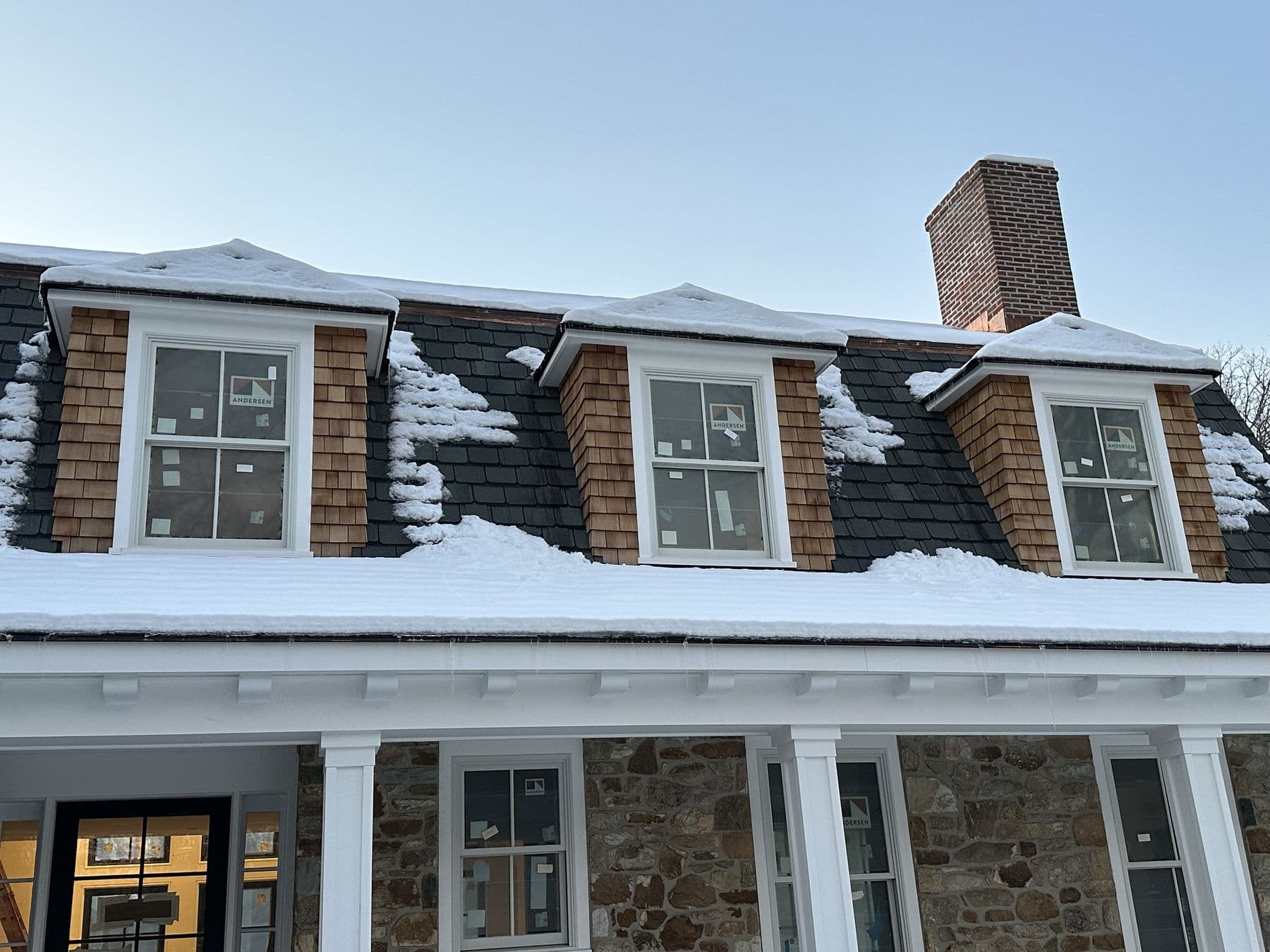
If you are not sure which your windows need, we will check each one and tell you, window by window. See our window replacement service and the Andersen windows project in Lower Merion.
Questions people ask about window replacement
Do I have to replace all the windows at once? No. Many people replace the worst windows first, or one side of the house at a time. Ordering everything at once can save on setup and pricing, but phasing is common and works well, as long as you stay with the same product line so the windows match.
Will new windows lower my energy bills? New windows reduce drafts and heat loss through the glass, and they make rooms more comfortable near the windows. How much they lower bills depends on how bad the old windows were and how the rest of the house is insulated. Air sealing around the new window during installation matters as much as the glass.
What glass should I choose? Double-pane glass with a low-E coating and gas fill is the standard. Triple-pane adds cost and weight and makes sense in some cases, such as noisy streets or very cold rooms. Different low-E coatings suit different sides of the house; ask what is being quoted.
What about lead paint in older houses? Houses built before 1978 may have lead paint on window trim and sashes. Contractors working on them must follow EPA lead-safe work practices, which means containment, careful cleanup and certified renovators. Ask whether your contractor is lead-safe certified.
Can windows be replaced in winter? Yes. Each opening is open only for a short time, and we close one before opening the next. Some sealants and paints have temperature limits, so exterior finishing may wait for a warmer day.
Signs your windows need replacing, not repair
- Fogging between the panes, meaning the seal has failed.
- Rot in the sash or frame.
- Sashes that will not stay open or will not lock.
- Drafts you can feel with the window closed and locked.
- Condensation that runs down and soaks the sill every winter.
- Single-pane glass in a room that is always cold.
Some old wood windows are worth restoring instead: new glazing putty, weatherstripping and sash cords can bring them back, especially on historic houses. We will tell you if your windows are in that category.