October 10, 2026 · 6 min read
ZIP System sheathing vs housewrap: what we use and why
By the D&E Mako Renovation crew, Ephrata, PA. General guidance, not a quote for your house.
Every wall needs a layer behind the siding that stops water and air but lets moisture escape. For decades that meant plain sheathing covered with housewrap, such as Tyvek. Since the mid-2000s, many builders use ZIP System instead: sheathing panels with the water-resistant layer already on them, with the seams sealed by tape. We have used both, sometimes on the same house. This guide explains how they work, how they compare and when we pick each.
 Lower Merion TwpJun 2025
What each one is
Sheathing plus housewrap
The traditional wall: OSB or plywood sheathing nailed to the studs, then a sheet of housewrap stapled over it. Housewrap is a woven or spun polyethylene fabric that stops liquid water but lets water vapor pass. Tyvek is the best-known brand. Laps are taped, windows and doors get flashing tape, and the siding goes on top.
ZIP System
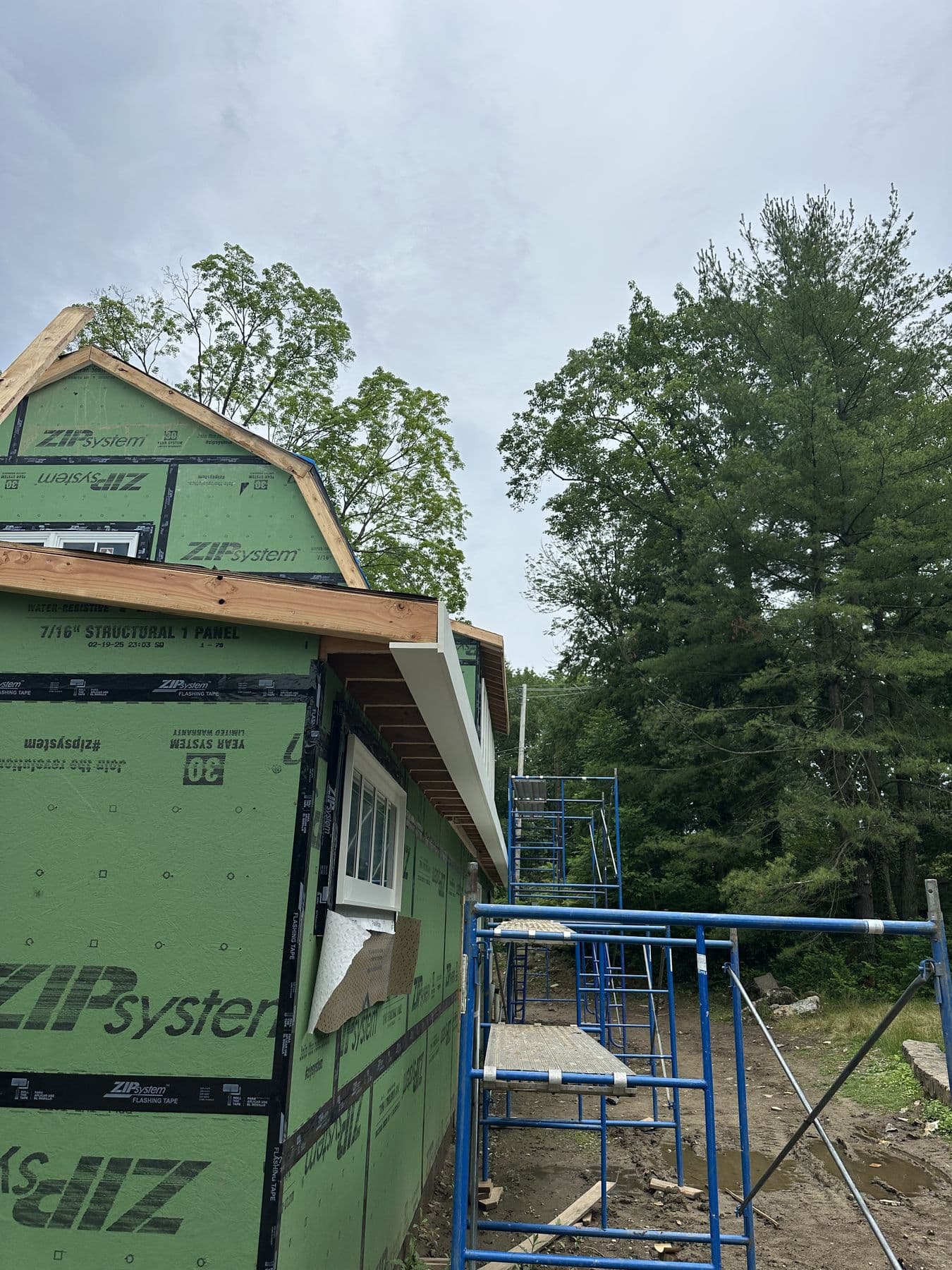
ZIP System sheathing, made by Huber, is OSB with a water-resistant coating bonded to the face, usually the green panels you see on new houses. The panels go on the studs, and every seam is taped with ZIP System tape, rolled down hard. The coated panel plus the tape form the water-resistive barrier and the air barrier in one layer.
How they compare
| Sheathing + housewrap | ZIP System | |
|---|---|---|
| Layers to install | Two (sheathing, then wrap) | One plus tape |
| Air sealing | Depends on careful taping of every lap and edge | Very good if every seam is taped and rolled |
| Wind during install | Wrap can tear or flap before siding | Panels are rigid, nothing to blow off |
| Exposure before siding | Wrap degrades in sun after a few months | Coating is rated for longer exposure |
| Material cost | Lower | Higher |
| Labor | More (two steps) | Less wrapping, but careful taping |
| Mistakes | Torn wrap, reverse laps, untaped seams | Untaped or poorly rolled seams |
Why we like ZIP on additions and new walls
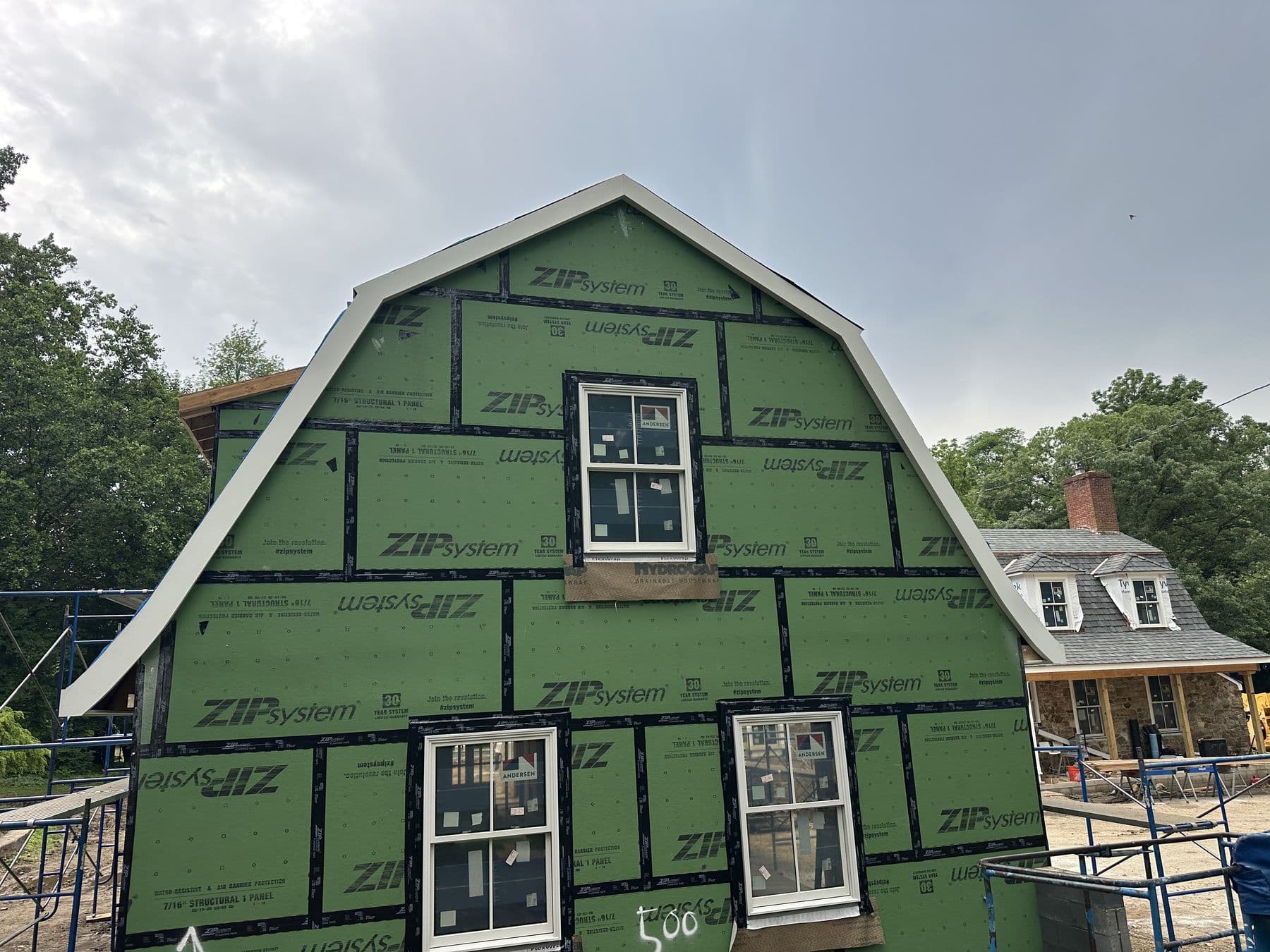
On the stone gambrel house in Lower Merion, the new gambrel addition was sheathed in ZIP System and every seam was taped before the windows went in. It stood like that through part of the summer while other work went on. With housewrap, a long build means wrap flapping in the wind and degrading in the sun. ZIP stays put.
Other reasons:
- Air sealing is easier to get right. The panel face is the air barrier. With housewrap, air sealing depends on taping every lap and every edge at the top and bottom of the wall.
- Faster dry-in. One step instead of two gets the building closed sooner.
- Easy to inspect. You can see every taped seam.
 Lower Merion TwpJun 2025
When housewrap is the better choice
- Re-siding an existing house. When old siding comes off and the existing sheathing is sound, we repair what needs it and wrap it. Tearing off good sheathing to install ZIP makes no sense.
- Budget-limited projects where material cost matters more than labor.
- Walls that are not being re-sheathed.
- Some rainscreen and drainage details, where a drainable housewrap or a separate drainage mat is part of the design.
What both need to work
Neither system works if the details around openings are wrong. On both:
- Windows get a sloped sill pan or sill flashing, so water that gets in drains out.
- Flashing tape at the sides and head of windows and doors, lapped shingle-style: lower pieces first, upper pieces over them.
- Head flashing above windows and doors.
- Kickout flashing where a roof edge meets a wall, to throw water away from the wall.
- Proper laps. Water must always flow over a lap, never into it. Reverse laps are the most common mistake with housewrap.
- Penetrations sealed: vents, pipes, wires, light boxes.
Where new meets old
Additions and dormers are where systems meet. The new wall may be ZIP, the old wall may be old sheathing with housewrap, and the roof has its own underlayment. The joints between them are where leaks start. We flash these joints by hand, lapping layers so water always flows outward, and on stone houses we let flashing into the masonry joints where the new wall meets the stone.
Does ZIP System need housewrap too?
No. ZIP System is designed to be the water-resistive barrier on its own when installed and taped per the manufacturer. Some builders add a drainage layer behind siding, especially with fiber cement or stucco, but that is about drainage, not a second barrier.
Cost
ZIP panels cost more than plain OSB plus housewrap. Labor is partly offset because there is no separate wrap step. On a new addition the total difference is usually a small share of the overall cost, which is why we use ZIP on most new walls.
What it means for your project
- New addition or dormer: ZIP System is our usual choice for walls and often roof sheathing.
- Re-siding with sound sheathing: repair and wrap.
- Either way: the flashing details around windows, doors and roof-wall joints matter more than the brand of barrier.
 Lower Merion TwpJul 2025
Which one is greener?
Both systems use similar amounts of material. The bigger environmental factor is how airtight the finished wall is, because air leaks drive heating and cooling use for the life of the house. Whichever barrier makes it easier for your crew to get a tight wall is the greener choice. On new walls that is often ZIP; on re-siding jobs it is careful housewrap over repaired sheathing.
ZIP System on roofs
ZIP also makes roof sheathing with a built-in underlayment layer and taped seams. It lets a new roof be dried in quickly, which helps on dormers and additions where the roof is open for a while before shingles go on. The roofing manufacturer's requirements still apply, and ice and water shield is still needed at eaves and valleys in our climate.
Inspections and documentation
Building inspectors in many Pennsylvania townships check the water-resistive barrier and window flashing before siding goes on. With ZIP, the inspector can see every taped seam. With housewrap, laps and window flashing are visible. Photos of the wall at this stage are useful later for the homeowner and for warranty claims; we take them as a matter of course.
What it costs to get it wrong
A leak behind siding is expensive because it shows up late, often as rot in sheathing and framing years after the job. Fixing it means removing siding, trim and sometimes windows. The extra hour spent taping seams and lapping flashing correctly on day one is the cheapest insurance a wall can have.
How ZIP tape is installed right
The tape is what makes ZIP work, so the details matter:
- Clean, dry panels. Dust, ice and moisture keep the tape from bonding.
- Tape centered over the seam, with no wrinkles.
- Rolled down hard with the manufacturer's roller. Pressure activates the adhesive; hand-smoothing is not enough.
- Laps shingle-style, with upper pieces over lower pieces.
- Inside and outside corners with stretch tape or flashing as specified.
- Penetrations sealed with tape or flashing collars.
Untaped or poorly rolled seams are the main way ZIP walls leak.
Housewrap done right
Housewrap is forgiving when installed carefully:
- Start at the bottom and lap upward, so each row overlaps the one below.
- Overlap vertical seams several inches and tape them.
- Tape the top edge to the sheathing so wind cannot get behind it.
- Cut window openings so the head flap can lap over the window flashing.
- Fix every tear with tape before the siding goes on.
- Do not leave it exposed to sun for months.
Rainscreen gaps
Some siding systems benefit from a small air gap behind the siding, called a rainscreen. It lets water that gets behind the siding drain and the back of the siding dry. Cedar shakes and some fiber cement installations use furring strips or a drainage mat. A rainscreen works with either ZIP or housewrap.
For more on additions, read adding a dormer. For siding prep, read should old siding be removed before new siding. See our dormers and additions service and the stone gambrel house dormers project.
Common questions
Can ZIP System be left exposed? The manufacturer rates it for a limited exposure period before siding goes on. That covers the normal gap between framing and siding on most projects; very long delays should be checked against current guidance.
Is ZIP better for energy efficiency? It makes good air sealing easier, which is one of the biggest factors in heating and cooling cost. Insulated versions with foam on the back also add continuous insulation.
Does ZIP replace window flashing? No. Windows still need sill pans and flashing tape lapped correctly with the panel.
Can you mix ZIP and housewrap on one house? Yes, and on additions we often do. The transition between them needs careful lapping so water stays on the outside.