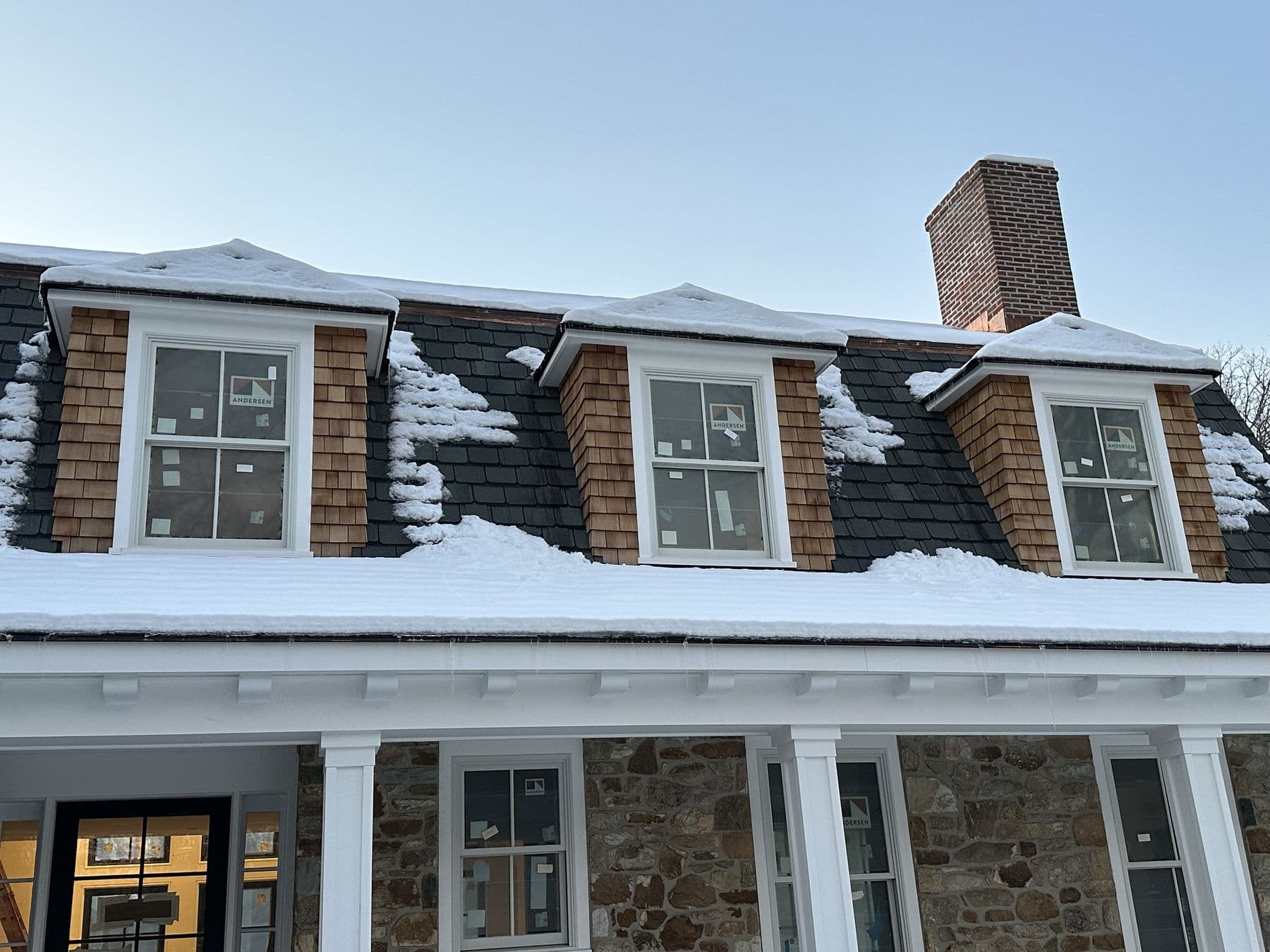
October 10, 2026 · 6 min read
AZEK and PVC trim: what it is good at, what to watch for
By the D&E Mako Renovation crew, Ephrata, PA. General guidance, not a quote for your house.
When we replace rotten exterior trim, we usually replace it with cellular PVC trim, and AZEK is the best-known brand. It is a great material, but it has its own rules. Installed like wood, it causes problems. This guide covers what PVC trim is, where it shines, what to watch for, how it compares to alternatives such as Boral TruExterior, and when aluminum capping makes more sense.
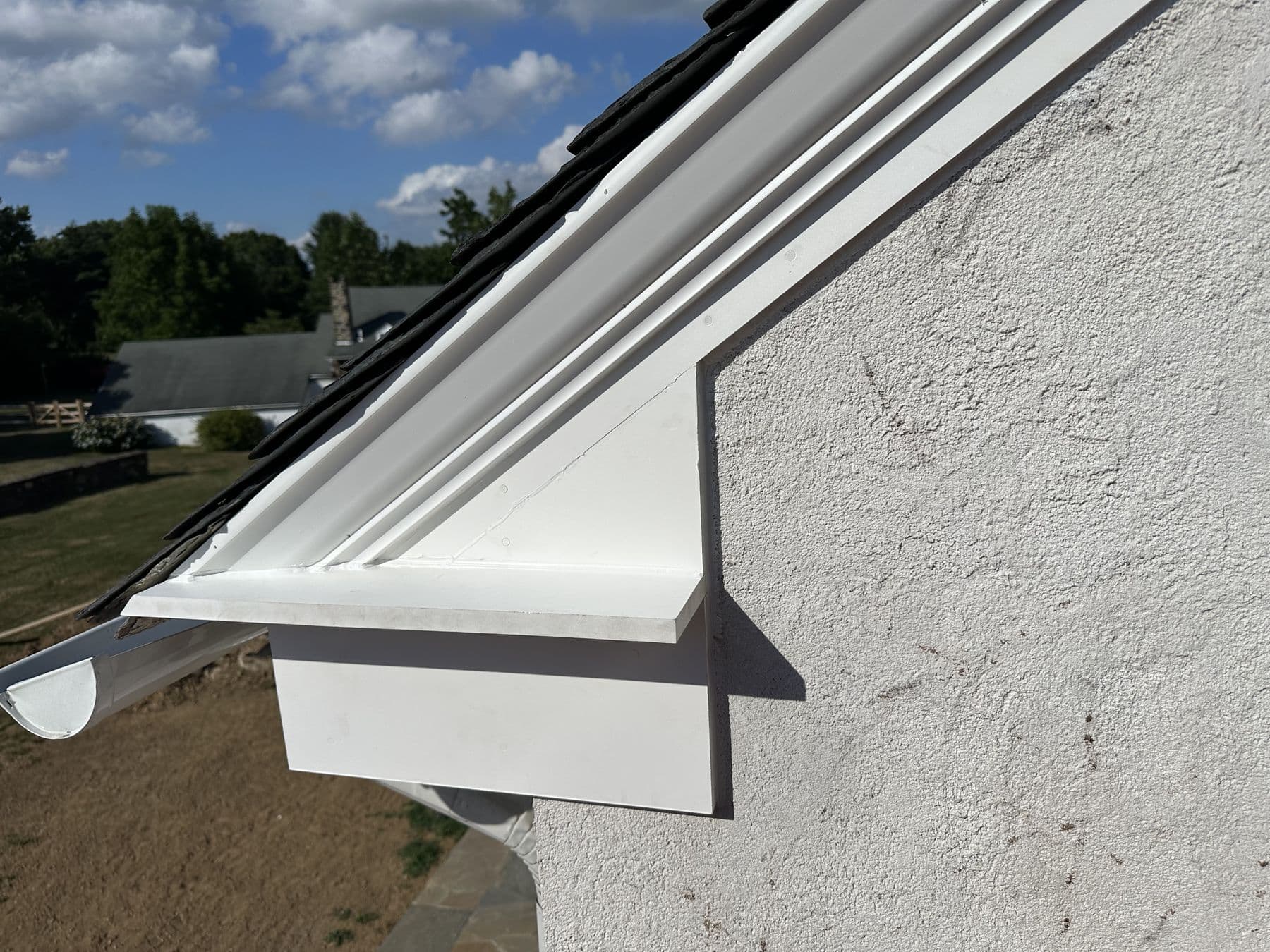 Newtown SquareJul 2024
What AZEK trim is
AZEK trim is cellular PVC: a foamed plastic with a smooth skin, sold in boards and sheets in the same sizes as wood trim. It cuts, routes and nails with ordinary woodworking tools. Other brands, such as Versatex and Royal, make similar products.
It is used for:
- Window and door casings and brick mold.
- Corner boards, frieze boards and water tables.
- Fascia and rake boards.
- Porch ceilings (beadboard), column wraps and railings.
- Sills, which are where wood rots first.
What it does well
- Does not rot. Water does not soak in, so it does not decay where wood does: at sills, near the ground and behind gutters.
- Insects do not eat it.
- Holds paint, or can stay white. It does not need paint, but takes paint well with the right product.
- Shapes like wood. It can be routed into profiles, glued into built-up trim and even heat-bent into curves.
- Consistent. No knots, no checking, no splitting at nails.
What to watch for
It moves with temperature
PVC expands and contracts with heat more than wood. A long piece of fascia on a south wall can change length noticeably between a January morning and a July afternoon. That is why:
- Scarf joints and miters are glued with PVC cement and fastened on both sides, so they stay closed.
- Long runs are fastened per the manufacturer's spacing, often with more fasteners than wood.
- Gaps at butt joints are sized for the temperature at install time.
When these steps are skipped, joints open up in winter, which is the most common complaint about PVC trim.
Dark paint gets hot
Dark colors absorb heat, and PVC softens and moves more when hot. Use paints designed for vinyl and PVC, which reflect heat, and follow the manufacturer's color guidance.
Does AZEK turn yellow?
Bright white PVC can pick up a slight yellow or gray tint over the years, especially in strong sun, and dirt shows on white. Most of it is surface dirt and comes off with a mild cleaner and a soft brush. Painted PVC does not show it at all. Newer formulations resist UV better than early products.
It is not structural
PVC trim is trim. Porch posts need a structural post inside a PVC wrap, and wide fascia needs solid backing.
AZEK vs Boral TruExterior vs wood
| Cellular PVC (AZEK) | Boral TruExterior (poly-ash) | Primed pine | Fiber cement trim | |
|---|---|---|---|---|
| Rot | Does not rot | Does not rot | Rots where wet | Does not rot |
| Movement with heat | High | Low | Moves with moisture | Low |
| Paint | Optional | Required | Required | Required |
| Ground contact | Yes | Yes | No | No |
| Workability | Very easy | Easy | Very easy | Harder, dusty |
| Look | Smooth | Smooth or grain | Wood | Smooth or grain |
Boral TruExterior is made from fly ash and polymers. It moves very little with temperature, holds paint well and is a good choice for long runs and dark colors. It must be painted.
Primed pine is the cheapest and fine in protected spots, but rots wherever water lingers.
Fiber cement trim pairs with fiber cement siding, does not rot and is very stable, but is heavy and must be painted.
We use PVC most often because it is the most forgiving in wet spots and needs no paint, and Boral or fiber cement where color or long runs make movement a concern.
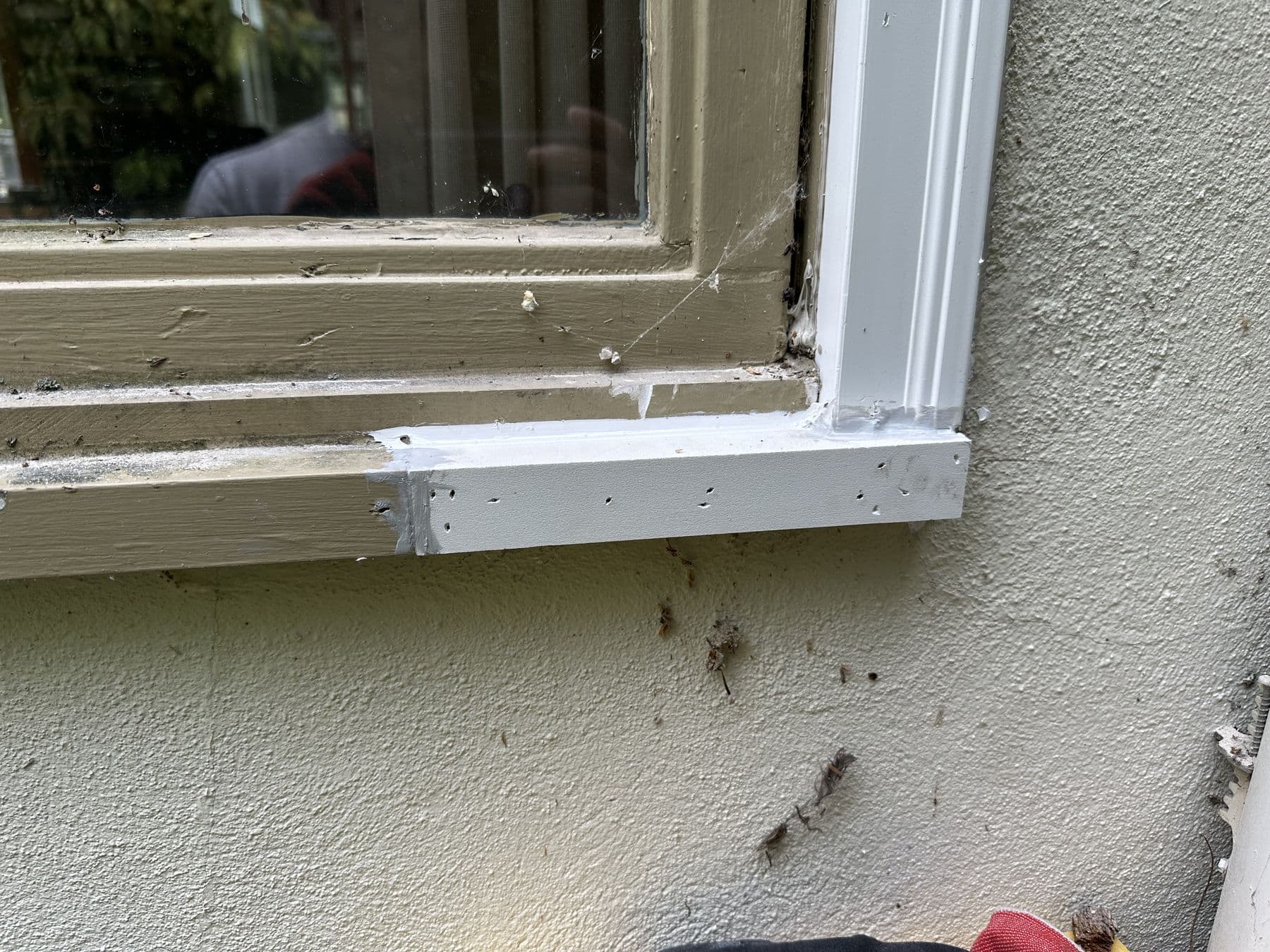 Lower Merion TwpSep 2025
Aluminum trim capping
Aluminum capping, also called trim coil or wrapping, is sheet aluminum bent on site with a brake to cover wood trim around windows, doors and fascia. It never needs paint.
Where it works: over solid wood trim, on houses where no-paint matters more than a crisp wood look, and on window frames during insert window replacement.
Where it fails: over rotten wood (it hides the rot until the damage is serious), when it is caulked tight with no way for water to escape, and when the bends are sloppy, which leaves oil canning and gaps.
Warped, chalking or peeling aluminum is usually a sign of age, thin coil, or that it was fastened too tight to move. Replacing it is a good moment to check the wood underneath and switch to PVC trim if the wood is gone.
Typical uses on older Pennsylvania houses
- Window sills on stucco and stone walls. Wood sills here rot first. A PVC sill with flashing behind is the lasting fix, like the one we rebuilt on a stucco house in Lower Merion.
- Rake boards and returns. Built-up PVC rakes can match the original profile, as on the stucco farmhouse in Newtown Square.
- Porch ceilings and columns. PVC beadboard and column wraps hold up under porches.
- Corner boards and water tables near the ground.
How we install PVC trim
- Back-prime or seal any wood it touches.
- Glue all miters and scarf joints with PVC cement.
- Fasten with stainless or coated trim screws or nails at the specified spacing.
- Fill holes with PVC filler or plugs.
- Use flashing behind sills and above casings, so water that gets past the trim is sent out.
- Seal only where needed, with sealant compatible with PVC.
- Paint with a PVC-rated paint if painting.
 Lower Merion TwpApr 2026
Is PVC trim worth the cost?
PVC costs more per foot than primed pine. On a house you plan to keep, in places where wood has rotted before, it pays back by not needing replacement and needing much less paint. In dry, sheltered spots, painted wood can still be a reasonable choice.
Repairing PVC trim
PVC trim is easy to repair. A cracked or dented piece can be cut out and a new piece glued and fastened in, with the joint filled and sanded like wood. Nail holes are filled with PVC filler. Small gouges can be filled and painted. Because the material is the same color all the way through, a scratch on unpainted white trim is barely visible.
Questions people ask about PVC trim
Can I paint AZEK trim any color? Yes, with a paint made for vinyl and PVC. Light and mid tones are no problem. For very dark colors, check the trim maker's guidance and use a paint with heat-reflective pigments, because dark PVC in full sun gets hot and moves more.
Does PVC trim need to be primed? No. It comes ready to paint or to leave white. Clean it with a mild detergent and let it dry before painting so the paint bonds.
How long does PVC trim last? Manufacturers offer long limited warranties, often 25 years or lifetime for residential use, and the material itself does not rot. In practice, PVC trim outlasts several paint jobs on the siding around it.
Can PVC trim be used next to the ground? Yes. Unlike wood, cellular PVC can touch masonry and sit close to grade, which makes it a good choice for water tables, column bases and the bottom of door frames.
Is it OK to use PVC for window sills? Yes, and it is one of the best uses. Sills take the most water of any trim. A PVC sill with flashing behind and a slight slope outward will not rot.
What about the smell or look of plastic? Painted PVC trim looks like painted wood from a few feet away. Unpainted, it has a smooth satin finish. It does not smell once installed.
Where we still use wood
There are places where wood is still the right choice: interior trim, stain-grade exterior details on historic houses where a review board requires wood, and some very detailed moldings that are only made in wood. In those cases we prime all six sides, install flashing behind and keep the wood out of standing water.
Maintenance checklist for PVC trim
- Wash once a year with water and a soft brush; mild detergent for stubborn dirt.
- Look at glued joints in late winter, when the material is at its smallest; a hairline opening can be filled with PVC-compatible sealant.
- Check sealant joints where trim meets siding or masonry every few years.
- Repaint painted PVC on the same schedule as the house, typically every 8 to 12 years.
- Keep gutters clean, so water does not overflow onto fascia and trim.
See our exterior trim service and the rotted window sill rebuild in Lower Merion. For fascia and soffit specifics, read soffit and fascia repair.