October 10, 2026 · 6 min read
Soffit and fascia repair: causes, cost and how it is done right
By the D&E Mako Renovation crew, Ephrata, PA. General guidance, not a quote for your house.
Rotten fascia is one of the most common exterior repairs we do. It usually starts with a gutter, spreads to the soffit behind it and, if left alone, reaches the rafter tails and roof deck. The good news is that it is very fixable, and with the right materials it does not come back. This guide explains what the parts are, why they rot, what repair costs and how we do it.
 Manheim areaApr 2025
Fascia, soffit and frieze: what is what
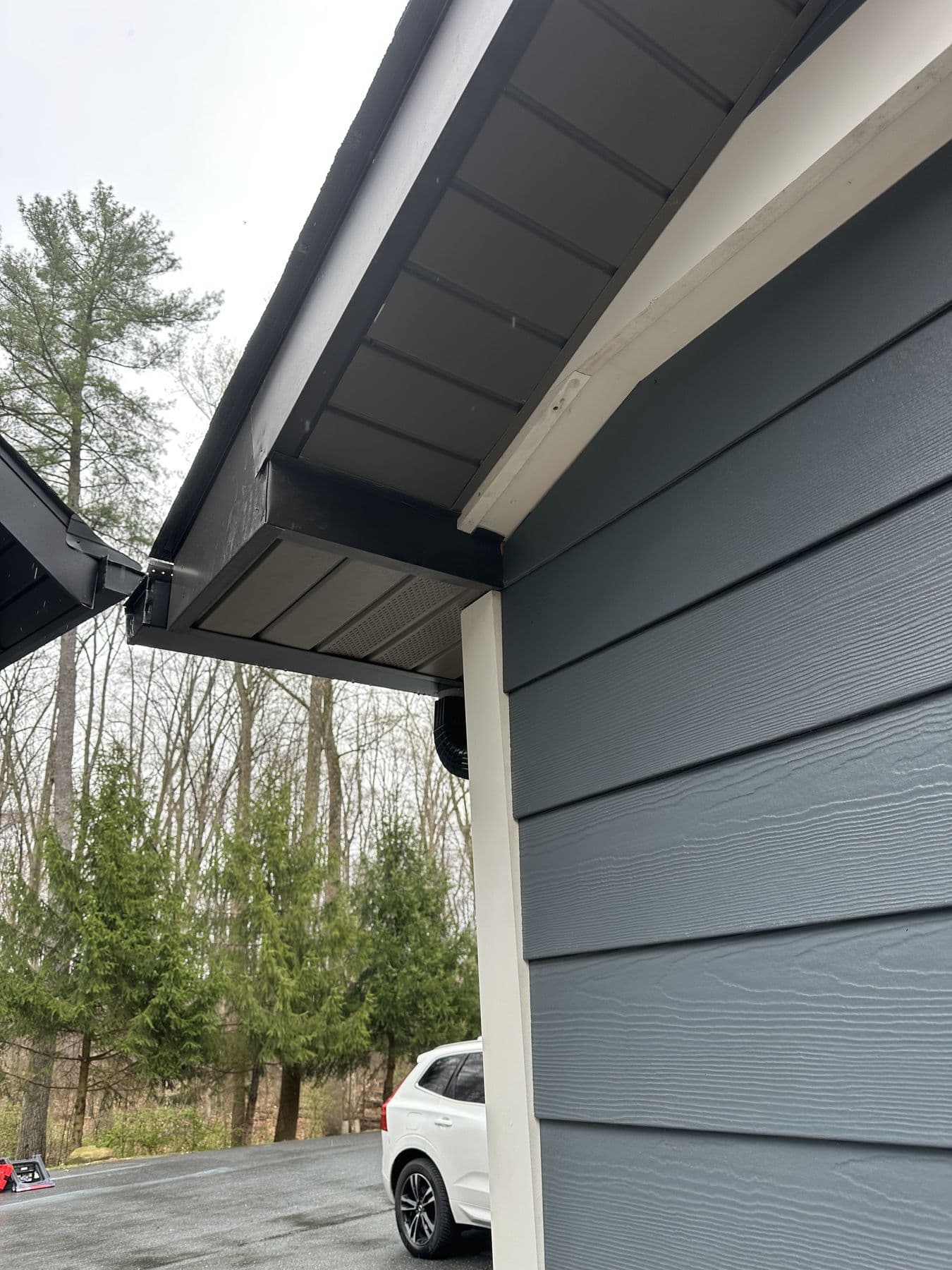
- Fascia is the vertical board at the edge of the roof. The gutter hangs on it.
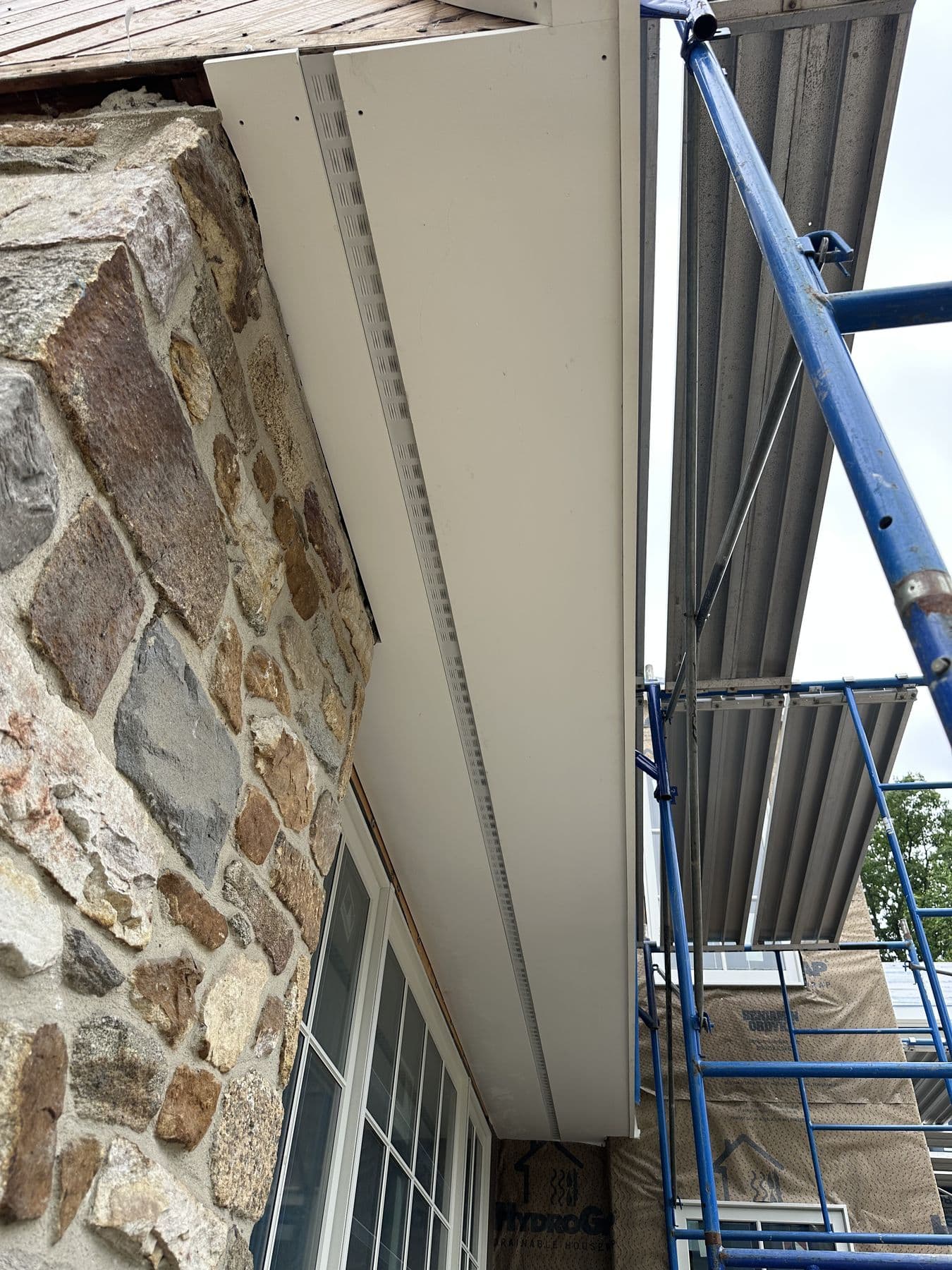
- Soffit is the underside of the roof overhang, between the fascia and the wall. It is often vented so air can flow into the attic.
- Frieze board runs along the top of the wall, right under the soffit, and closes the joint between wall and overhang.
- Rake boards are the fascia along the sloped edges of a gable.
- Sub-fascia is a rough board some houses have behind the finish fascia.
On older houses these were all wood. Today most replacements are PVC (such as AZEK), aluminum or fiber cement.
Why fascia and soffit rot
Almost every case we see comes down to water staying where it should drain:
- Overflowing or clogged gutters. Water spills over the back of the gutter and soaks the fascia.
- Gutters pitched the wrong way or sagging, so water sits in them against the board.
- Missing drip edge. Without a metal drip edge at the roof edge, water runs down behind the gutter onto the fascia.
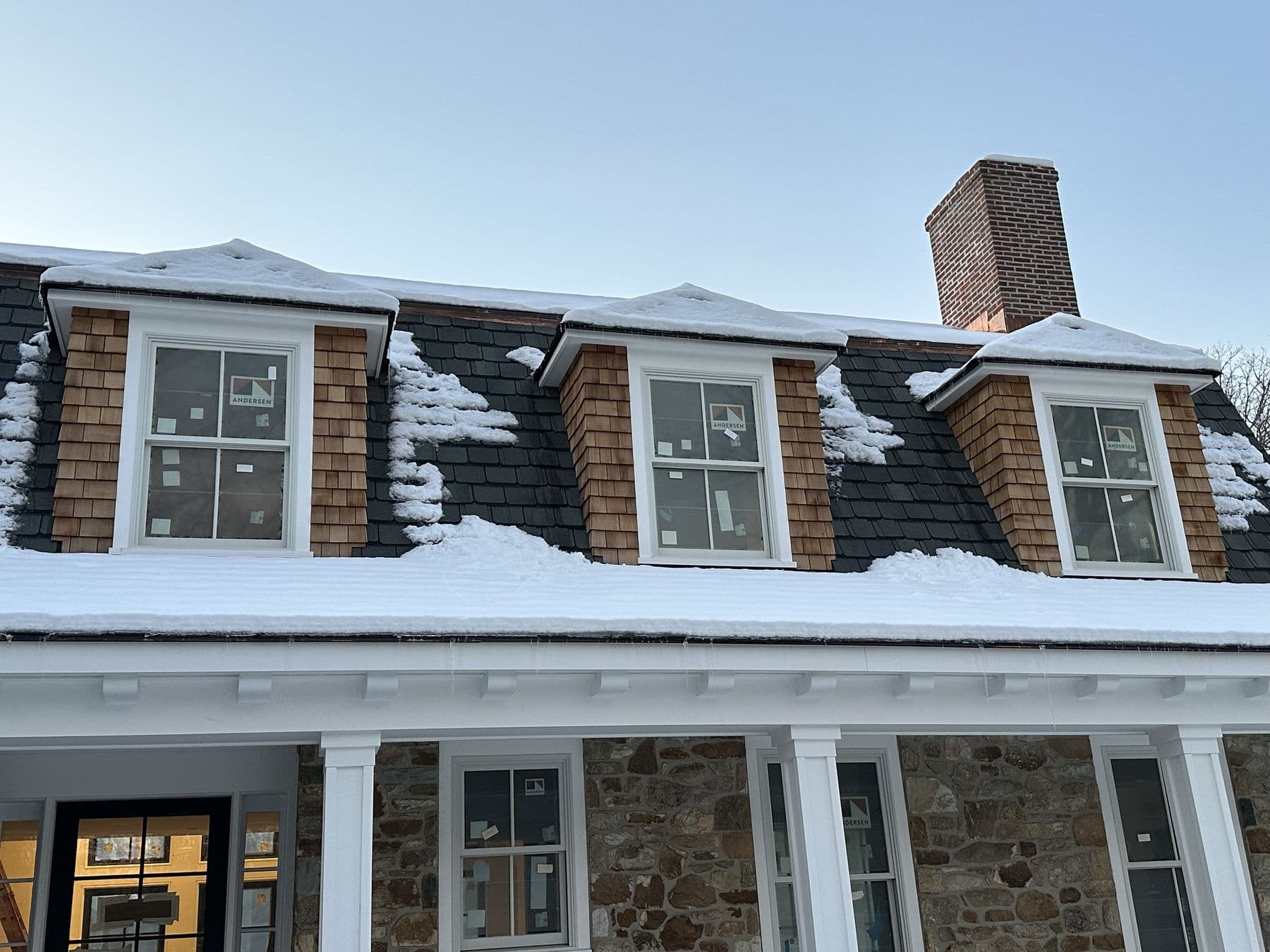
- Ice dams. In winter, snow melts on the warm upper roof, refreezes at the cold edge and backs water under the shingles and into the fascia and soffit.
- Peeling paint. Bare wood soaks up water every rain.
- Poor attic ventilation. Warm, moist attic air condenses on cold roof sheathing near the eaves.
Fixing the board without fixing the cause means doing it again in a few years.
Signs you need repair
- Paint peeling or blistering on the fascia.
- Soft spots when you push a screwdriver into the board.
- Gutters pulling away or sagging.
- Stains on the soffit, or soffit panels sagging or missing.
- Birds, bees or squirrels getting into the soffit, a sure sign of a gap.
- Water stains on the walls below the eaves.
 Lower Merion TwpMay 2025
What soffit and fascia repair costs
National cost guides put combined soffit and fascia replacement at roughly $9 to $34 per linear foot, with fascia alone around $5 to $12 per foot and soffit $4 to $22 per foot depending on width and material. For 100 to 200 feet of roof edge on a one-story house that works out to about $900 to $6,800, and two-story houses, wide overhangs or rotten rafter tails can push a job to $7,000 to $10,000 or more (ThePricer, This Old House).
What moves the price:
- Height. Second-story eaves need ladders or staging.
- Hidden damage. Rotten rafter tails or roof decking found once the fascia comes off.
- Material. PVC and aluminum cost more than wood but last much longer.
- Gutters. Removing and rehanging gutters, or replacing them.
- Detail. Built-up rakes, returns and crown molding on older houses take far more time than a plain board.
A fair quote includes an allowance or a per-item price for rafter tail repair, since nobody can see them until the fascia is off.
How we repair soffit and fascia
- Find the cause. Before we quote, we look at the gutters, drip edge, roof edge and attic venting.
- Remove the gutter carefully if it will be reused.
- Remove rotten fascia and soffit, cutting back until we hit solid wood.
- Repair what is behind. Sister or replace rafter tails, replace sub-fascia, and fix roof decking at the edge if needed.
- Install drip edge if it is missing, tucked under the roofing.
- Install new fascia, usually PVC, with joints glued and fastened so they stay tight through heat and cold.
- Install new soffit, vented where the attic needs air, solid where it does not.
- Rehang or replace gutters with the right pitch to the downspouts.
- Finish. Fill, caulk where needed, paint if desired.
Choosing materials
| Material | Pros | Cons |
|---|---|---|
| Wood (pine, cedar) | Cheapest, traditional | Rots if paint fails or gutters overflow |
| PVC (AZEK and others) | Does not rot, holds paint, can be shaped | Moves with heat, joints must be done right |
| Aluminum wrap | No paint ever | Only over solid wood; hides rot if wrapped over it |
| Vinyl soffit | Cheap, vented options | Looks plain, can sag on wide overhangs |
| Fiber cement | Does not rot, pairs with fiber cement siding | Heavy, must be painted |
For fascia on houses we work on, PVC is our usual choice. It is the right balance of durability and looks, especially on older houses where the trim profiles matter. We go deeper in our AZEK and PVC trim guide.
 Lower Merion TwpDec 2025
About aluminum wrapping
Aluminum fascia wrap is popular because it never needs paint. It is a good finish over solid wood. The problem is when it is bent over rotten wood to make the problem disappear. The wood keeps rotting under the aluminum, and you find out when the gutter falls off. We cut out the rot first, then wrap or replace.
Ice dams and soffit ventilation
On older Pennsylvania houses, ice dams are a common cause of fascia and soffit damage. They form when heat from the house warms the roof, snow melts, and the water refreezes at the cold overhang. Fixes include:
- Air sealing the attic floor so warm air does not leak into the attic.
- Insulation to the right depth.
- Ventilation: vented soffit for intake and ridge or roof vents for exhaust, so the roof stays cold.
- Ice and water shield under the first few feet of roofing at the eaves, done during reroofing.
Vented soffit only helps if air can get from the soffit into the attic. Insulation pushed against the roof deck often blocks it; baffles keep the path open.
Gutters and fascia go together
Since gutters cause most fascia rot, it makes sense to deal with them at the same time. If your gutters are old, dented or undersized, replacing them while the fascia is open costs less than doing it later. On stone and historic houses, copper gutters are worth considering; see our copper gutters guide.
Can I fix fascia myself?
A short section of first-story fascia on a simple roof is a reasonable DIY job for a handy homeowner with good ladders. Second-story work, rotten rafter tails, gutters and anything near the roof edge are where professional help is worth it, for safety and because hidden damage is common.
Bottom line
- Fascia rots because water sits on it, almost always from gutters, missing drip edge or ice dams.
- Cut out every soft piece, repair what is behind, and fix the cause.
- Replace with PVC or wrap solid wood in aluminum, never wrap rot.
Questions people ask about fascia and soffit
Can fascia be repaired without removing the gutter? Small repairs sometimes, but usually not well. The gutter is fastened through the fascia, and the rot is often right behind it. Taking the gutter down is the only way to see and fix the whole board.
How long does soffit and fascia replacement take? A typical one-story house takes a few days; two-story houses, wide overhangs and rafter tail repairs take longer. Gutters can be rehung the same day the fascia is done.
Do I need new gutters with new fascia? Not always. Good aluminum or copper gutters can be rehung. Old, dented, leaking or undersized gutters are worth replacing at the same time, since the labor of removing and rehanging them is already included.
What color should fascia and soffit be? White is traditional and hides little dirt; black or dark bronze fascia with white soffit is a popular modern look; matching the trim color to the windows ties the house together. PVC can be painted any color with the right paint.
Do animals get into soffits? Gaps in soffits are a favorite entry point for birds, squirrels, bats and wasps. A new continuous soffit with proper vents and screened openings closes those gaps. If animals are already in the attic, they should be removed humanely before we close it up.
Venting math, simplified
Attics need roughly equal intake at the soffit and exhaust at the ridge. A common rule is one square foot of net free vent area for every 150 square feet of attic floor, half low and half high, or one per 300 with a vapor retarder. Vent products list their net free area. The point is balance: ridge vent with no soffit intake pulls conditioned air out of the house instead.
See our exterior trim, fascia and soffit service and the PVC rake trim project in Newtown Square.