October 10, 2026 · 6 min read
Composite vs wood decking for a Pennsylvania deck or porch
By the D&E Mako Renovation crew, Ephrata, PA. General guidance, not a quote for your house.
When people plan a new deck, steps or a porch floor, the first question is usually the boards: composite or wood. It is a fair question, but the boards are only part of what makes a deck last. This guide compares composite, PVC and pressure-treated wood decking, then covers the framing, footings and railings that decide whether a deck is still solid in twenty years.
 WayneMar 2026
The three main options
Pressure-treated pine
The standard lumber deck. Southern yellow pine treated with preservatives against rot and insects.
- Cost: lowest.
- Upkeep: needs cleaning and a stain or sealer every two to three years to stay looking good.
- Problems: checks, splinters, cupping and twisting as it dries. Fasteners can pop.
- Lifespan: fifteen to twenty years for boards with care, often less without.
Composite (capped)
Boards made from wood fiber and plastic, with a hard plastic cap on the surface. Trex, TimberTech, Fiberon and others.
- Cost: two to three times the boards of pressure-treated, more in total than wood.
- Upkeep: wash once or twice a year.
- Problems: gets hot in direct sun, especially dark colors; can show scratches; needs joists spaced per the manufacturer.
- Lifespan: commonly 25 years or more, with long manufacturer warranties.
PVC decking
Boards made entirely of plastic, such as AZEK.
- Cost: the highest of the three.
- Upkeep: wash only.
- Benefits: lightest, stays cooler than composite, does not absorb water.
- Problems: price, some products expand more with heat.
Side by side
| Pressure-treated | Composite | PVC | |
|---|---|---|---|
| Board cost | Lowest | Middle | Highest |
| Staining | Every 2 to 3 years | Never | Never |
| Splinters | Yes | No | No |
| Heat in sun | Moderate | Can get hot | Cooler than composite |
| Look | Wood, weathers gray | Wood-grain colors | Wood-grain colors |
| Board life | 15 to 20 years | 25 years or more | 25 years or more |
Over ten years, the upkeep on wood (time or money for cleaning and staining) closes much of the price gap. That is why most decks we build now are composite.
 MediaOct 2025
What really decides how long a deck lasts
Footings below frost
In Pennsylvania the frost line is typically around 36 inches, set by your township. Footings shallower than that heave in winter and the deck goes out of level. Concrete footings or helical piers below frost are the foundation of a good deck.
The ledger
Where a deck attaches to the house, the ledger board must be bolted to the house framing (not nailed, and never to brick veneer) and flashed so water does not get behind it. Rotten rim joists behind unflashed ledgers are one of the most common causes of deck collapses.
Framing
The framing under composite decking is usually pressure-treated lumber, and it is the part that lasts or fails. Good practice:
- Joist spacing per the decking maker, often 16 inches on center, closer for diagonal boards.
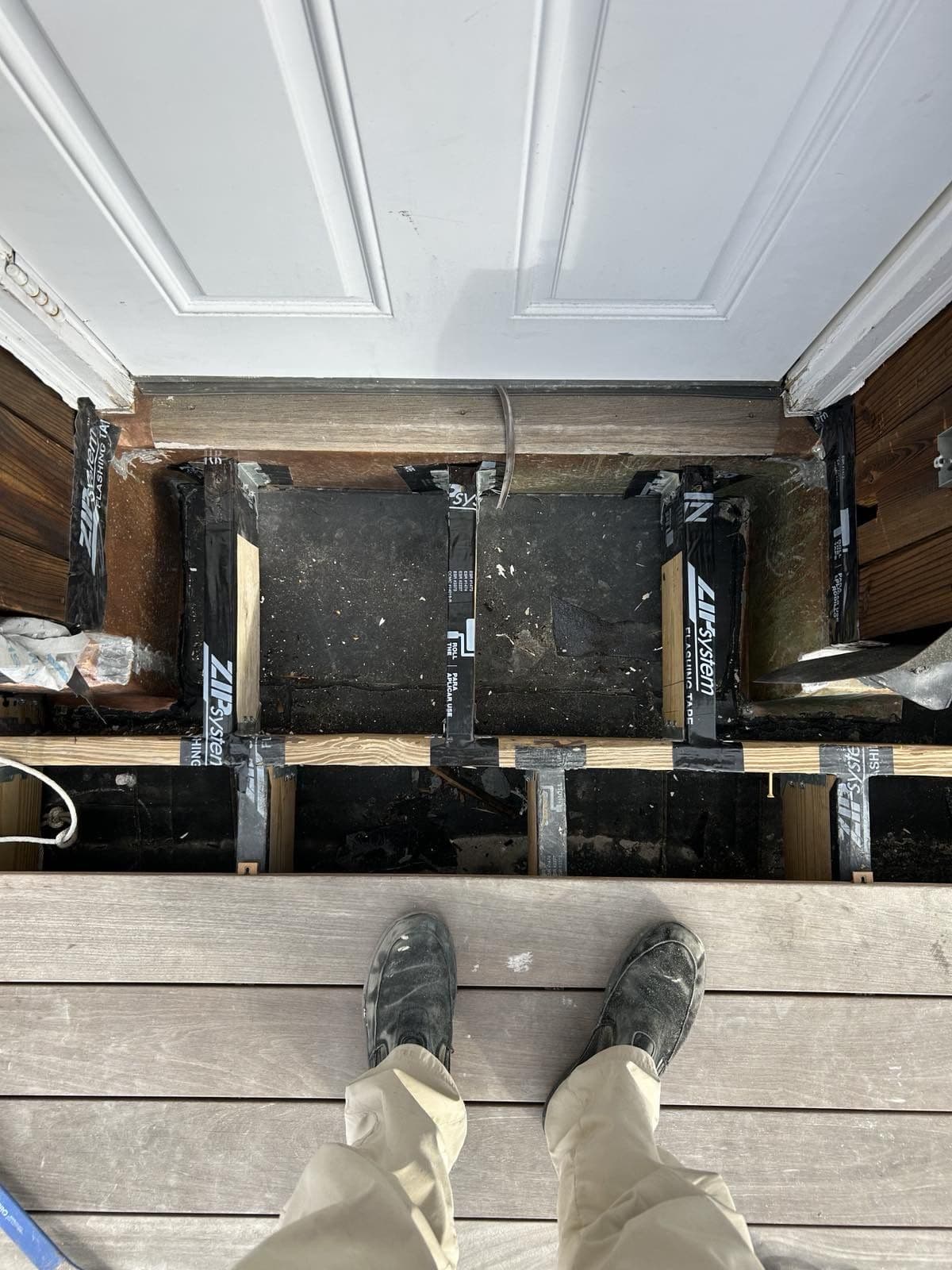
- Joist tape on top of joists to keep water out of the wood under the boards.
- Proper hangers and fasteners, rated for treated lumber.
- Beams sized for the span.
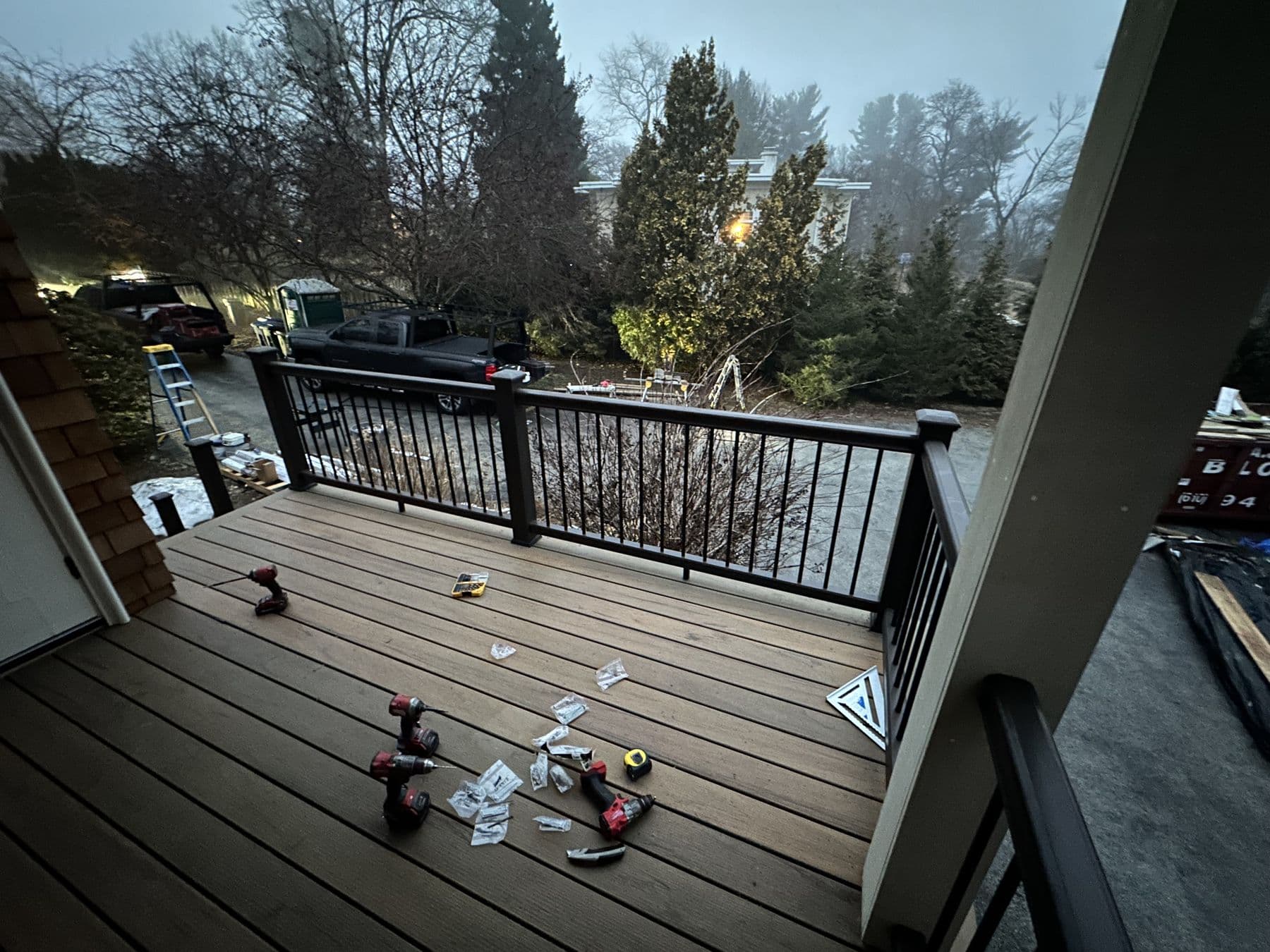
When we rebuilt the deck on stone piers in Wayne, much of the work was underneath: new beams and their connections to the piers.
Railings and stairs
- Railings must meet height and baluster spacing rules.
- Stairs need consistent riser heights, proper landings and graspable handrails.
- Posts must be properly attached; a railing post that wobbles is a safety issue.
Aluminum railings, like the black ones in Wayne, need no paint and suit stone and shake houses.
Drainage and ventilation
Decks need air under them so the framing can dry. Low decks close to the ground and decks boxed in with skirting need ventilation and good drainage below.
Porches are different
A covered porch floor is protected from most rain, so options open up:
- Tongue and groove porch flooring in wood, composite or PVC, painted or unpainted.
- Beadboard ceilings in PVC to avoid peeling paint.
- Column wraps in PVC or fiberglass around structural posts.
We cover porches in more detail on our porches and decks page, including the timber truss porch in Ewing, New Jersey.
Hidden fasteners or face screws?
Most composite decking can be installed with hidden clips in grooved boards, so no screws show on the surface. It looks cleaner and avoids screw heads catching bare feet. Face screws with colored heads are used at edges and stairs.
Colors and heat
Dark composite colors look great but get hot in direct summer sun. On a south or west-facing deck with no shade, lighter colors or PVC are more comfortable. Ask for samples and leave them in the sun.
Permits
Most Pennsylvania townships require a permit for attached decks, decks over a certain height and covered porches. Plans show footing size and depth, framing, ledger attachment and railings. Inspections typically happen at footings, framing and final.
What drives the cost of a new deck
- Size and height (tall decks need bigger posts, bracing and longer stairs).
- Decking material.
- Railing type (aluminum, composite, cable, glass).
- Stairs and landings.
- Removal of an old deck.
- Footings: rock, slopes and access make them harder.
- Extras: built-in benches, lighting, skirting.
Composite steps against stone
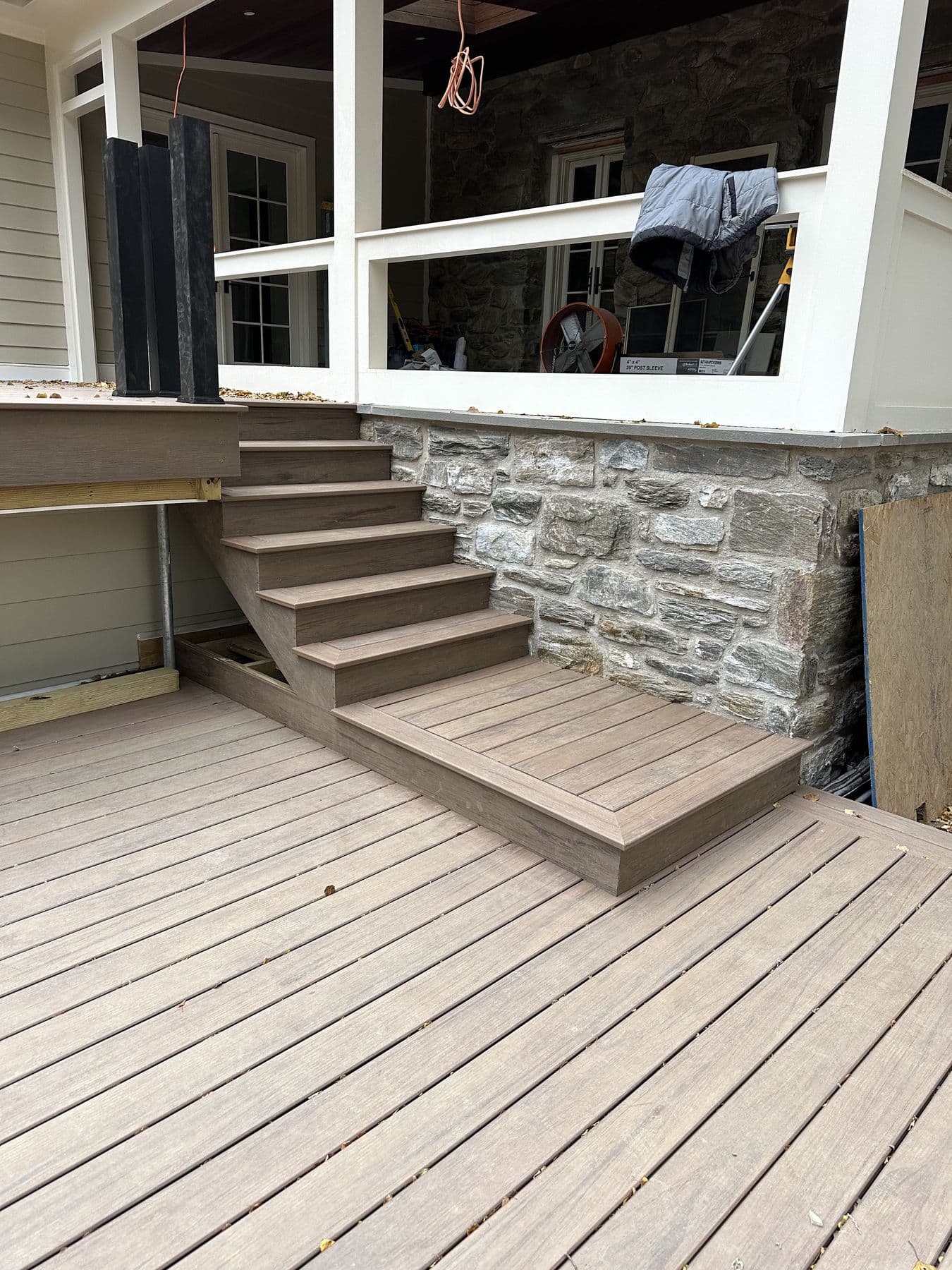
Steps and landings that sit against stone walls need a small gap and drainage so the framing does not stay wet against the masonry, like the composite steps and landing we built beside a stone knee wall in Media.
Bottom line
- Composite costs more up front, saves years of staining and lasts longer.
- Pressure-treated wood still makes sense for budget decks and framing.
- Footings, ledger flashing and framing decide the life of the deck more than the boards.
Cedar and hardwood decking
Between pressure-treated pine and composite sit cedar and tropical hardwoods such as ipe. Cedar is beautiful and naturally resists rot but is soft and needs regular finishing. Ipe is extremely hard and long-lasting but expensive, heavy and slow to install, with pre-drilled fasteners. Both are good choices for people who want real wood and accept the upkeep.
Signs your old deck needs replacing, not just new boards
- Posts that are soft at the base or sitting directly on the ground.
- A ledger nailed to the house with no flashing, or rot in the rim joist behind it.
- Joists that bounce or are cracked, split or soft.
- Rusted or missing joist hangers and fasteners.
- Footings that have heaved or settled so the deck is out of level.
- Railings that move when you push on them.
If the framing is sound, new decking and railings on the old frame can save money. If several of these signs show up, rebuilding the frame is safer.
Questions people ask about decks
Can composite decking go on my existing frame? Sometimes. The frame must be sound, level and spaced as the composite maker requires, often 16 inches on center or closer. Old frames built at 24 inches on center for thick wood boards usually need extra joists. We check every joist and the ledger before reusing a frame.
How do I clean composite decking? Sweep regularly, wash with a deck cleaner made for composite and a soft brush once or twice a year, and rinse pollen and leaves before they stain. Avoid pressure washing close to the surface unless the maker allows it.
Does composite get slippery? Capped composite has a textured surface and is generally no more slippery than wet wood. Algae on shaded decks can make any surface slippery, so keep it clean.
What about mold on composite? Older uncapped composite could grow mold inside the board. Modern capped boards resist it much better. Mildew on the surface washes off.
Can I install composite over a concrete patio? With sleepers or a pedestal system made for that purpose, yes, as long as water can drain under the boards.
Is a deck permit really needed for a low deck? It depends on your township. Many do not require permits for small freestanding decks below a certain height, but almost all require them for attached decks and decks over 30 inches. We check before we start.
Railing options
- Aluminum: strong, light, never needs paint, slim profile. Black aluminum suits stone and shake houses.
- Composite: matches composite decking, chunkier look.
- Cable: open views, more expensive, needs tensioning.
- Glass panels: the most open view, the highest cost and more cleaning.
- Wood: cheapest, needs the most upkeep.
Lighting and extras
Post cap lights, stair riser lights and under-rail lights make a deck safer at night and are easiest to plan before the decking goes down, when wiring can be run under the boards. Built-in benches, planters and privacy screens are also simpler to frame in at the start than to add later.
See our porches and decks service, the composite deck in Wayne and the composite steps in Media.